Launch offer — valid today only

FAA Instrument Rating Knowledge Test: One Topic per Page Holds, Approaches and Rules Drawn So You See Them at a Glance

Hold entries, the 1-2-3 rule, 600-2 and 800-2, 91.175, lost comms. You've read them three times and they still blur together. Here each topic fits on one page: the drawing first, then the numbers you need in a box. 81 illustrated pages.

I WANT THE ILLUSTRATED VERSION

🔒 Secure checkout · PDF by email · 30-day guarantee

One topic per pagethe drawing shows you the rule and the text backs it up
81 illustrated pages9 parts, from the knowledge test itself to test day
Up-to-date sourcesFAA handbooks, the AIM and 14 CFR Parts 61 and 91

This Is What the Pages You Will Study Look Like

One topic per page, the drawing that shows you how it works, and boxes with what you need to know:

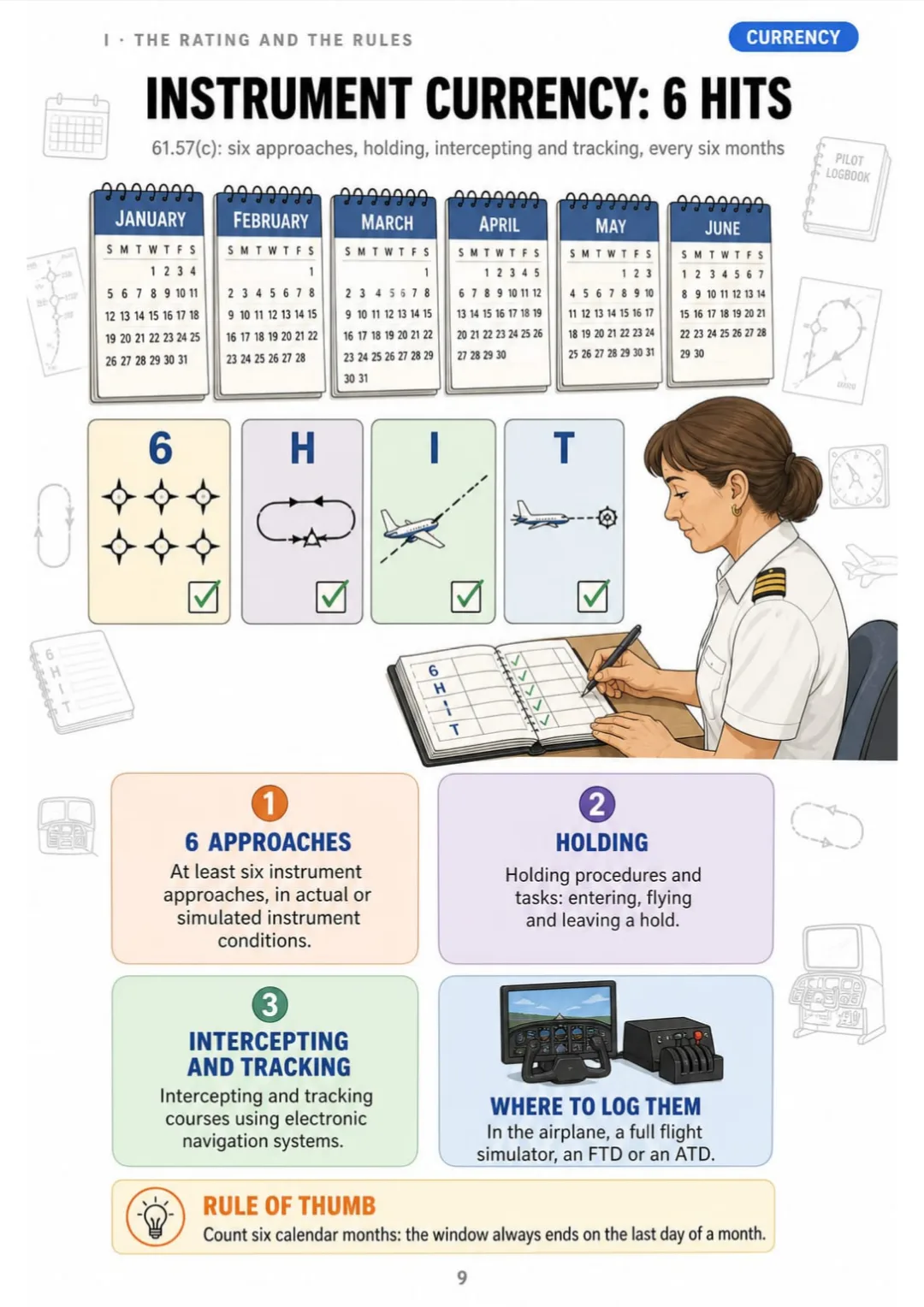
61.57(c): 6 approaches + Holding + Intercepting + Tracking within 6 calendar months
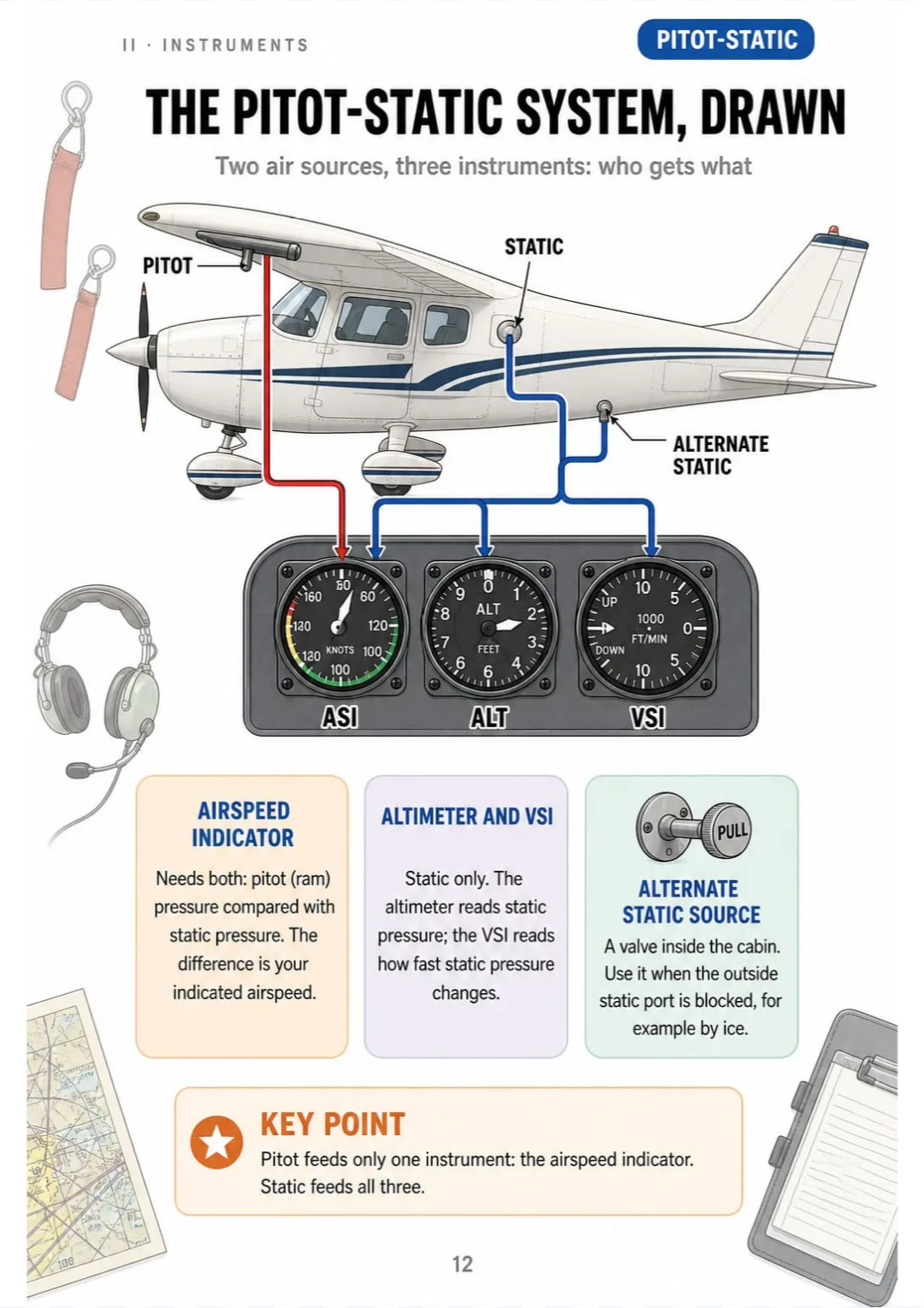
Pitot feeds the airspeed indicator only; static feeds airspeed, altimeter and VSI.
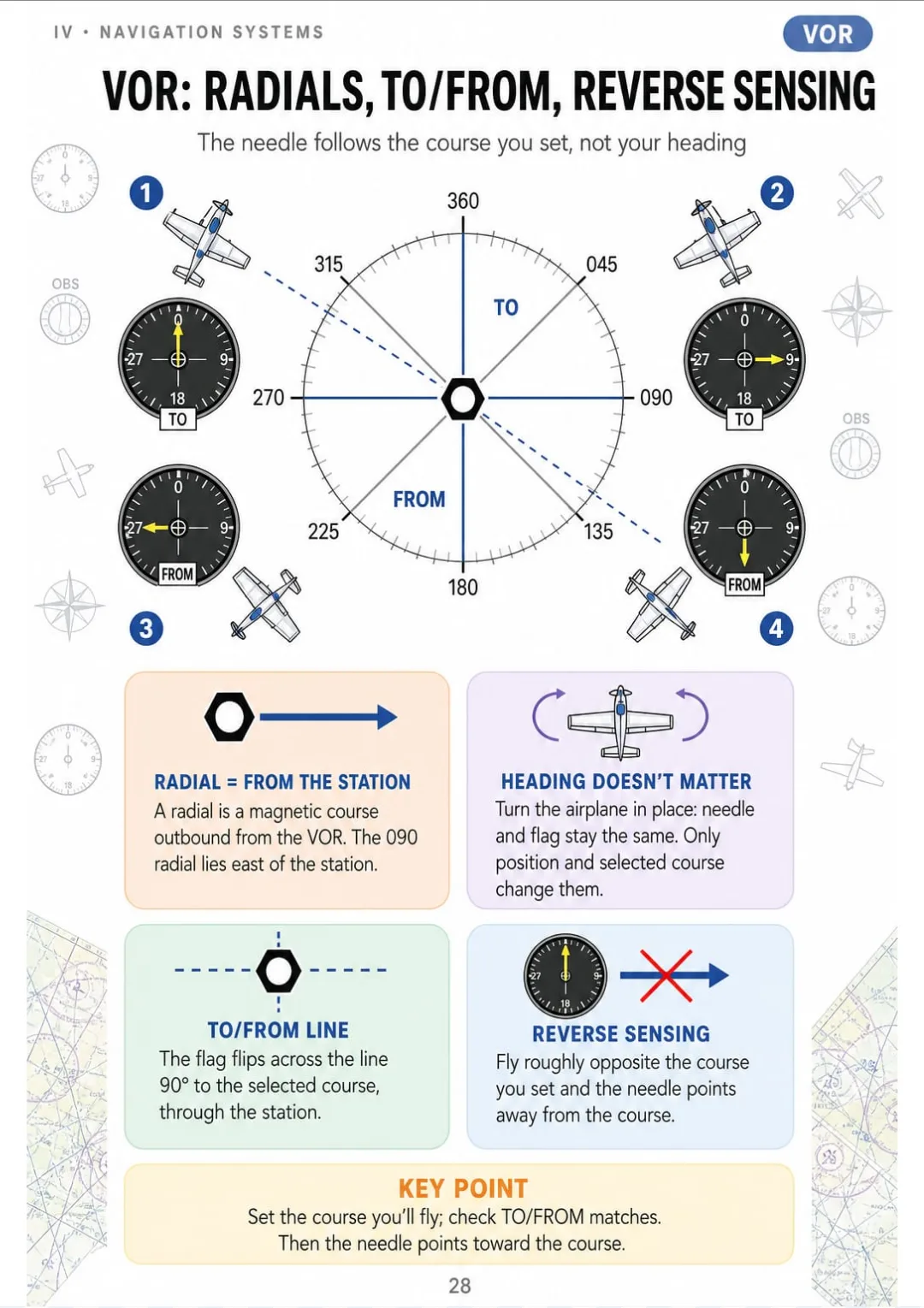
Four airplanes, one VOR rose: the indication depends on the selected course, not the heading.
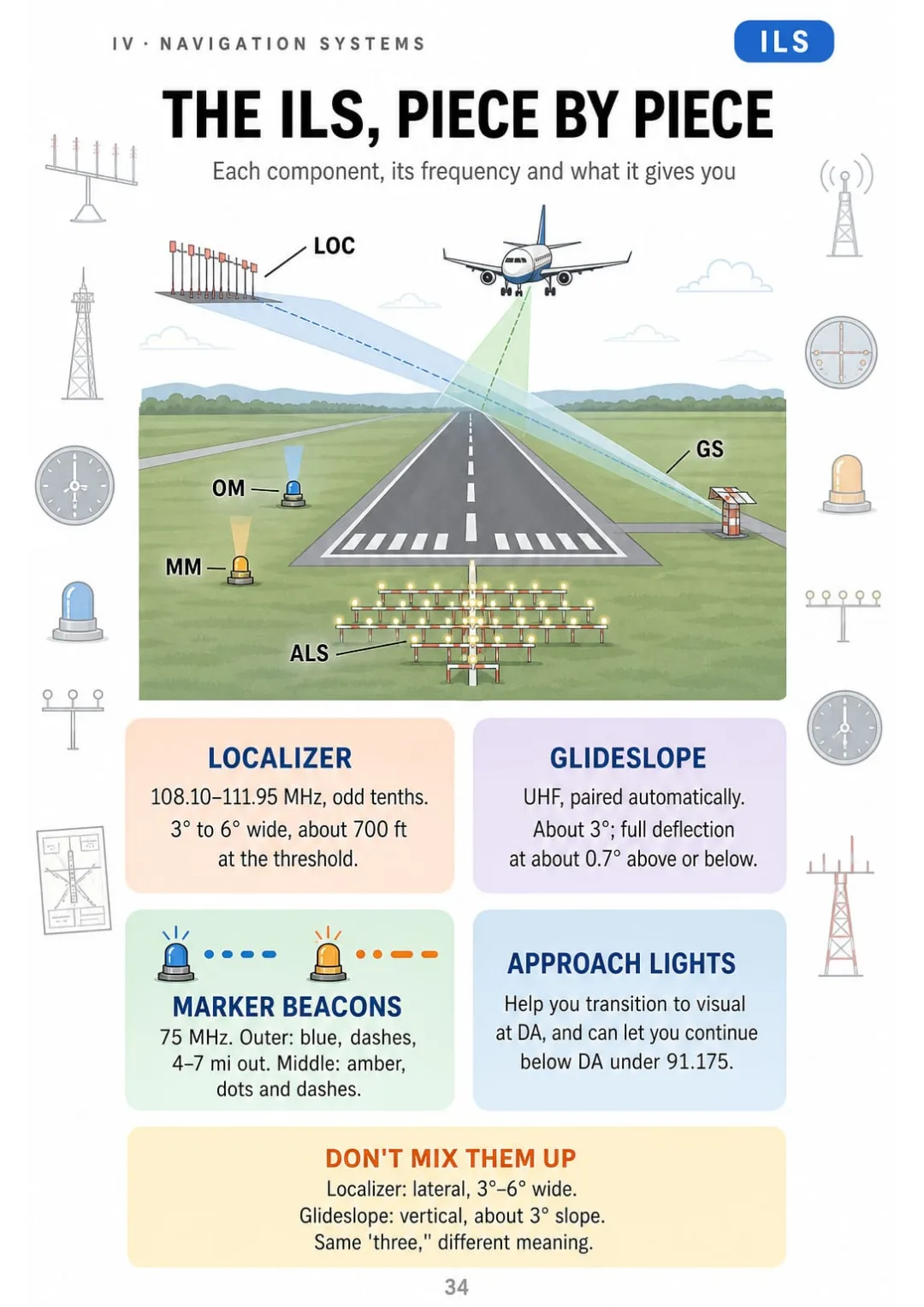
Localizer about 700 ft wide at the threshold, glideslope about 3°.
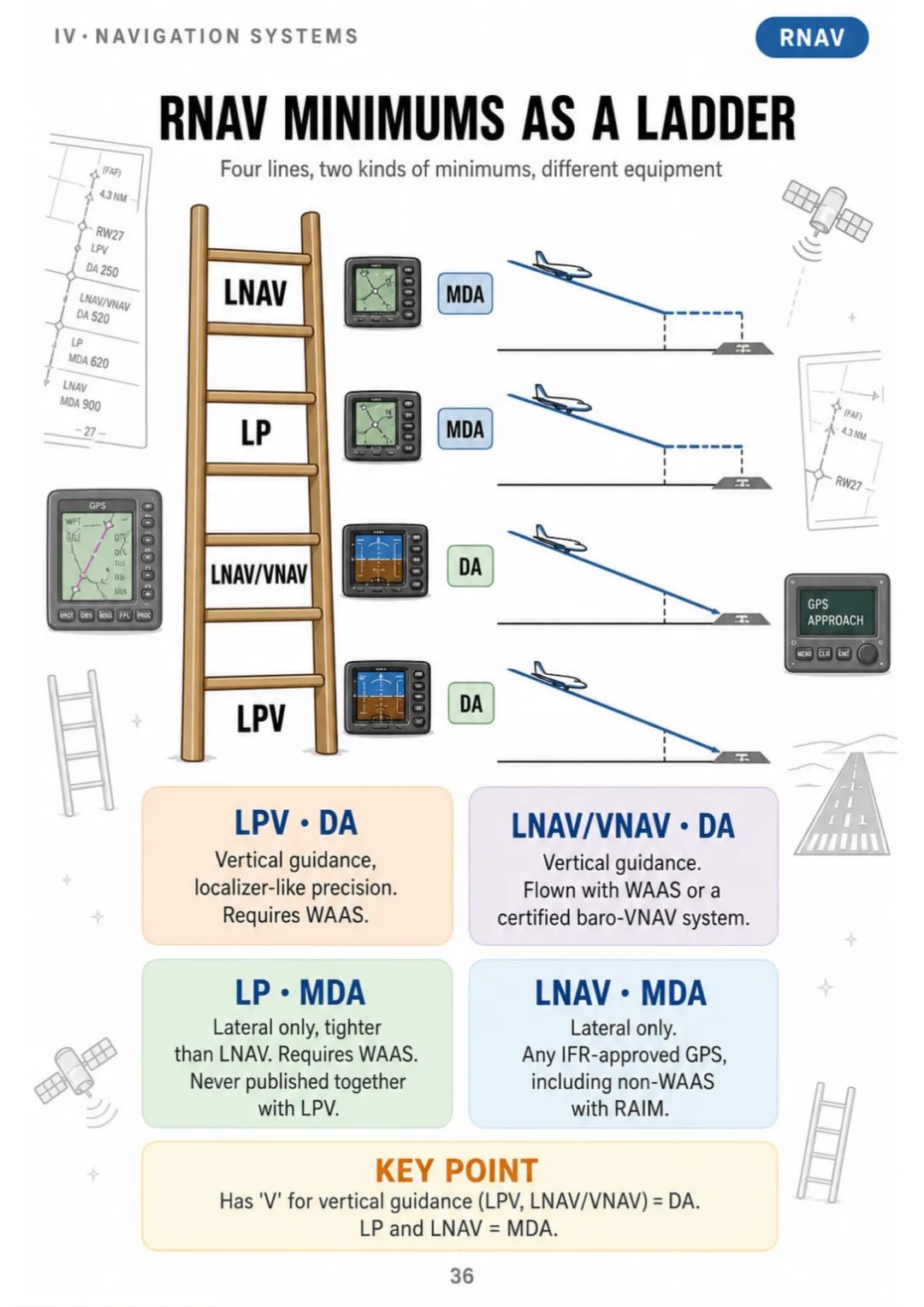
LPV and LNAV/VNAV publish a DA; LP and LNAV publish an MDA.
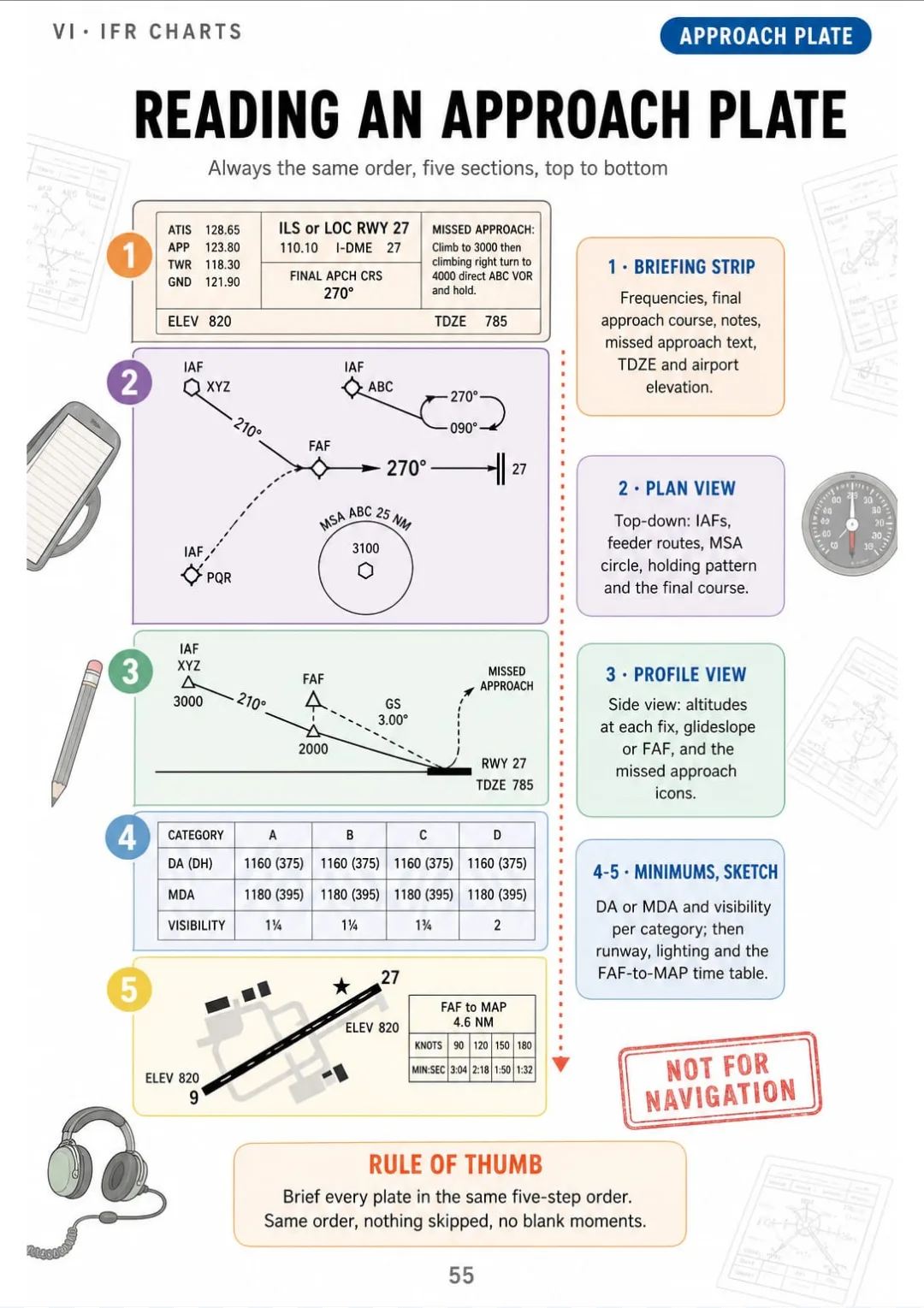
Briefing strip, plan view, profile view, minimums, airport sketch: always top to bottom.
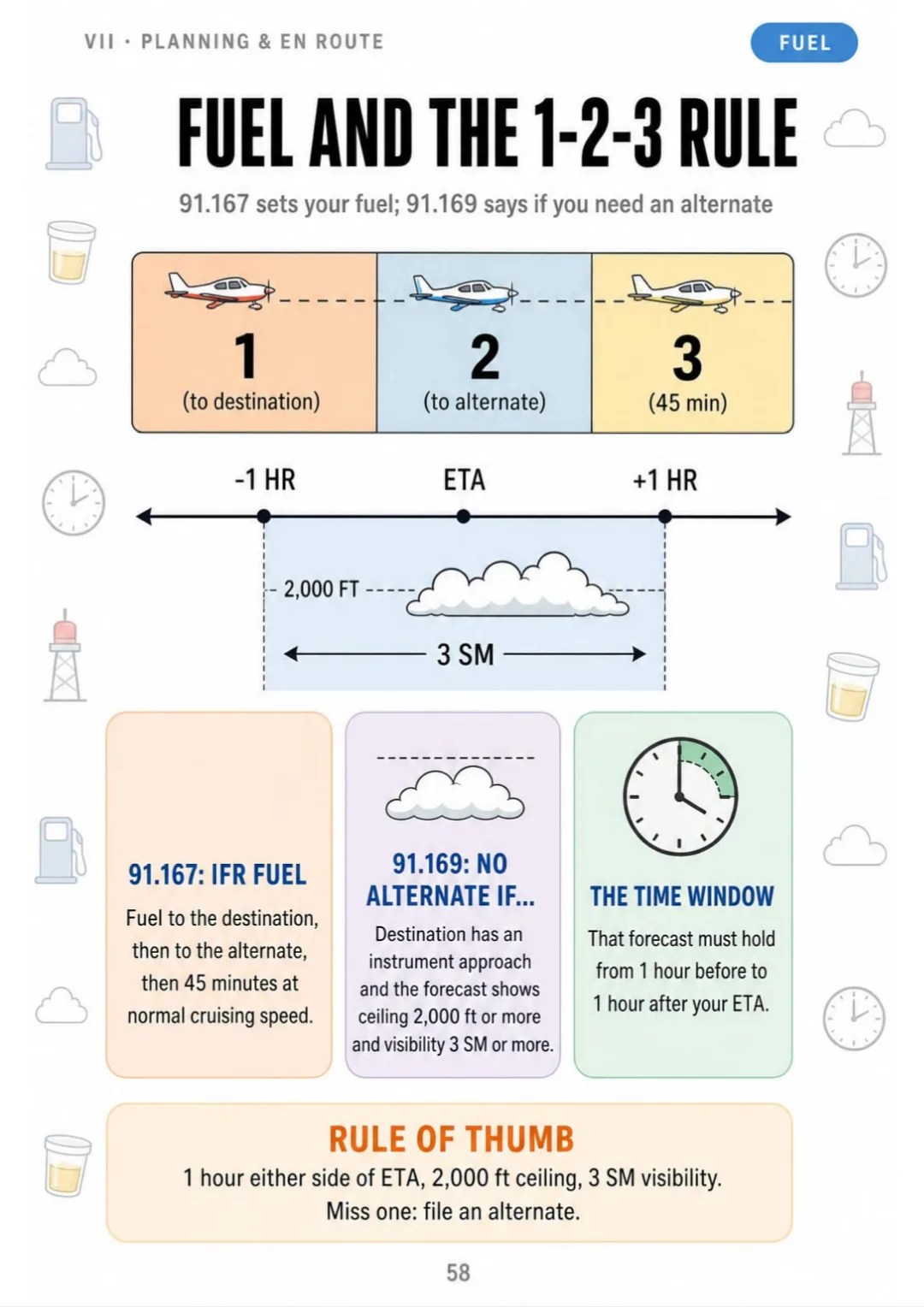
91.167 fuel blocks and the 1-2-3 alternate rule from 91.169.
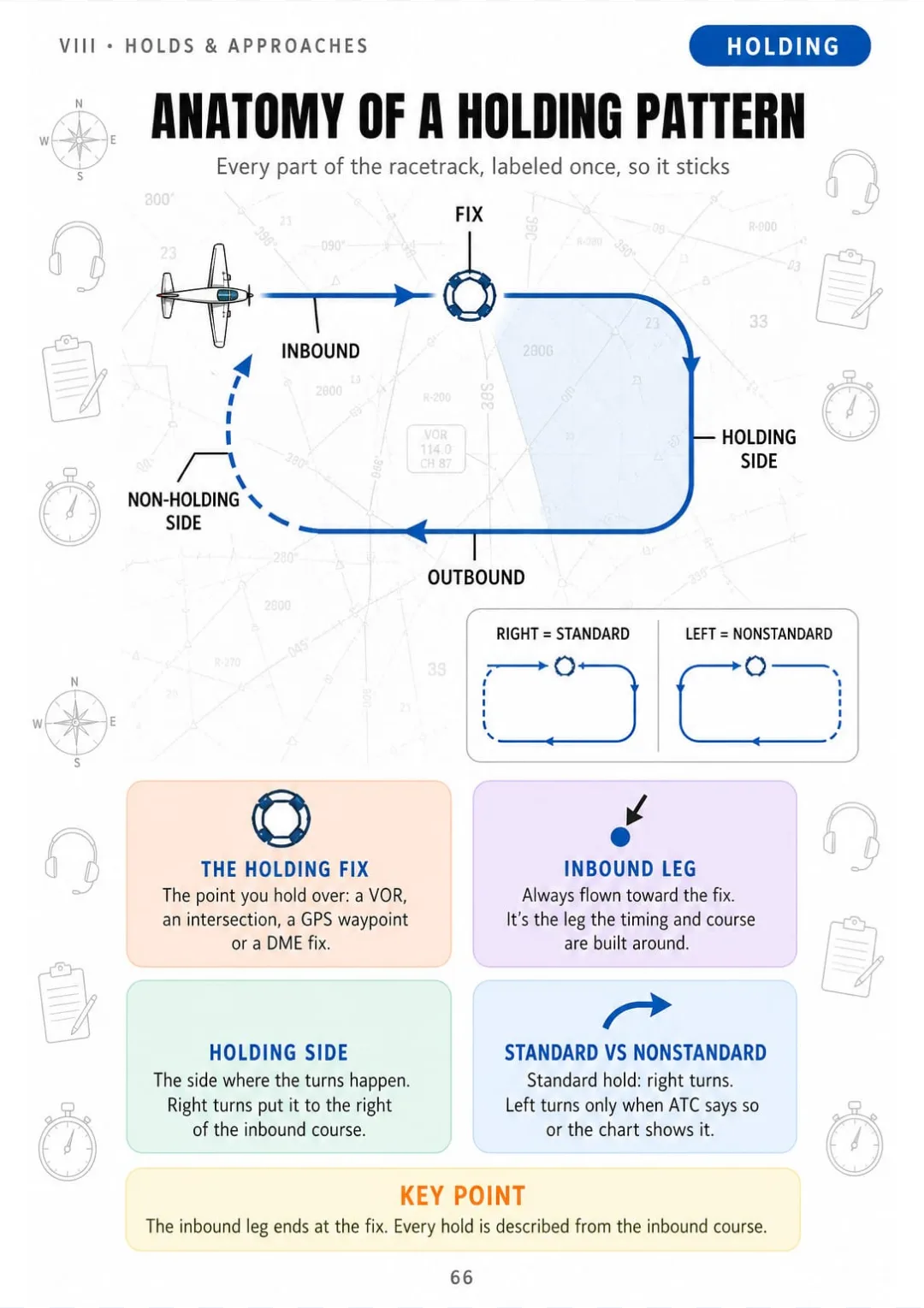
Holding pattern labeled: fix, inbound and outbound legs, holding side, right turns standard.

Swipe to see more →

These are real pages from the book. The table of contents is the full one: 9 parts and 76 topics.

It's Not Your Memory. It's That No One Showed You the Order.

You've read the control and performance method three times. You close the handbook...

...and you can't say which instruments you set and which ones you check. It was just one line after another.

Four airplanes, one VOR rose: the indication depends on the selected course, not the heading.

Here, attitude flying is a drawn sequence: attitude and power on one side, the performance instruments on the other, and the four steps in order: establish, trim, cross-check, adjust.

And on the pages next to it, every topic gets its own: the scan and its three errors, unusual attitude recovery, the VOR, the ILS and the hold.

First you understand why it's done that way. Then the order sticks on its own.

SEE THE DIFFERENCE

Stop Memorizing Rules You Can't Picture:

THIS
  • Pages and pages of dense text
  • Rules and procedures without a single drawing
  • On test day, you don't know where to start
The pitot-static system provides the sources of impact and static air pressure required for the operation of the airspeed indicator, the altimeter and the vertical speed indicator. Impact pressure is sensed by the pitot tube, mounted in an area of the airframe relatively free of disturbed airflow, while static pressure is sensed through one or more static ports. The airspeed indicator, being the only instrument connected to both sources, measures the differential between them, whereas the altimeter and vertical speed indicator utilize static pressure exclusively.
FOR THIS
  • Every rule and procedure drawn
  • One topic per page, with the numbers in boxes
  • You remember it because you've seen it
Pitot feeds the airspeed indicator only; static feeds airspeed, altimeter and VSI.
CONTENTS

Take a Look at the 9 Parts and 76 Topics

The rating and your rules, instruments and equipment, attitude flying and human factors, navigation, IFR weather, charts and altitudes, planning and clearances, holds and approaches, and the final review: 81 pages, all illustrated

IThe Rating and the Rules for You · pp. 6-11
  1. Inside the IRA Knowledge Test
  2. What It Takes to Earn the Rating
  3. When You Must Be Instrument Rated
  4. Instrument Currency: 6 HITS in 6 Months
  5. Grace Period and the IPC
  6. Safety Pilots and Logging Instrument Time
IIFlight Instruments and Equipment · pp. 12-20
  1. The Pitot-Static System, Drawn
  2. Blocked Pitot vs Blocked Static
  3. Altimeter Errors: High to Low, Look Out Below
  4. Five Kinds of Altitude
  5. Gyros: Rigidity and Precession
  6. The Compass and Heading Indicator: ANDS and UNOS
  7. Turn Coordinator and the Standard-Rate Turn
  8. Glass Cockpit: AHRS, ADC and Failures
  9. IFR Equipment and Inspections
IIIAttitude Flying and Human Factors · pp. 21-27
  1. The Control and Performance Method
  2. Primary and Supporting Instruments
  3. The Scan and Its Three Errors
  4. Unusual Attitude Recovery
  5. Spatial Disorientation
  6. Hypoxia and Oxygen Rules
  7. ADM: IMSAFE, PAVE and the Hazardous Attitudes
IVNavigation Systems · pp. 28-37
  1. VOR: Radials, TO/FROM and Reverse Sensing
  2. VOR Checks: ±4° and ±6° in 30 Days
  3. VOR Service Volumes
  4. DME and Slant Range
  5. Reading the HSI
  6. Intercepting, Tracking and Time to Station
  7. The ILS, Piece by Piece
  8. GPS: RAIM, WAAS and the Database
  9. RNAV Minimums: LPV, LNAV/VNAV, LP, LNAV
  10. GPS CDI Sensitivity
VWeather for IFR · pp. 38-47
  1. The Standard Atmosphere
  2. Stability, Clouds and Dew Point
  3. Fronts in Cross-Section
  4. Fog: Five Types, One Cause Each
  5. Structural Icing
  6. Thunderstorms
  7. Wind Shear and Microbursts
  8. Decoding a METAR and a TAF
  9. GFA, AIRMETs, SIGMETs and PIREPs
  10. Winds Aloft and Prog Charts
VIIFR Charts and Altitudes · pp. 48-56
  1. Airspace from the IFR Seat
  2. The Enroute Low Altitude Chart
  3. MEA, MOCA, MRA, MCA, MAA and OROCA
  4. Minimum and Cruising IFR Altitudes
  5. Departures: ODP vs SID
  6. Takeoff Minimums
  7. Reading a STAR
  8. Reading an Approach Plate Top to Bottom
  9. Airport Diagram, Lighting and the Chart Supplement
VIIPlanning, Clearances and En Route · pp. 57-65
  1. Filing the IFR Flight Plan
  2. Fuel and the 1-2-3 Rule
  3. Alternate Minimums: 600-2 and 800-2
  4. Copying a Clearance with CRAFT
  5. Void Time, Hold for Release and Cruise Clearance
  6. VFR-on-Top vs VFR Over-the-Top
  7. Required Reports: MARVELOUS VFR C500
  8. Radar Services and Position Reports
  9. Lost Communications: AVEF and MEA
VIIIHolds and Approaches · pp. 66-77
  1. Anatomy of a Holding Pattern
  2. Hold Entries: The 70° Line
  3. Solving a Hold Clearance in 3 Steps
  4. Holding Speeds and Leg Timing
  5. Approach Segments: IAF, IF, FAF, MAP
  6. Procedure Turn: When Not to Fly It
  7. Flying a DME Arc
  8. DA vs MDA: Precision, APV and Nonprecision
  9. The VDP and the Stabilized Descent
  10. 91.175: Going Below DA or MDA
  11. Circling, Visual and Contact Approaches
  12. The Missed Approach
IXFinal Review and Test Day · pp. 78-81
  1. The Look-Alike Numbers, Side by Side
  2. The Most Frequent Mix-Ups
  3. Your Repeatable Methods on One Page
  4. Test Day Checklist

What If Every Topic Fit on a Single Page?

Picture this:

Instead of rereading half a page on hold entries without being able to picture them...

...you open the page and find the hold drawn from above, with the 70° line and the three entry sectors: direct, teardrop and parallel.

LPV and LNAV/VNAV publish a DA; LP and LNAV publish an MDA.

And the ILS, the minimums box, the alternate rule, 91.175 and lost comms turn into drawings and tables you can read at a glance.

You stop memorizing and start understanding.

That's what Instrument Rating Made Visual does: 9 parts, 76 illustrated topics, and at the end the look-alike numbers side by side and a test day checklist. What you see in order, you remember.

Because what your brain sees organized, it remembers.

Here Is What You Get with Instrument Rating Made Visual:

Ipp. 6-11

The Rating and the Rules for You

What's on the IRA test, what it takes to earn the rating, when you must be instrument rated, 6 HITS in 6 months, the grace period and the IPC, and safety pilots.

IIpp. 12-20

Flight Instruments and Equipment

The pitot-static system, blocked pitot vs blocked static, altimeter errors, the five kinds of altitude, gyros, ANDS and UNOS, the standard-rate turn, glass cockpit failures and IFR inspections.

IIIpp. 21-27

Attitude Flying and Human Factors

Control and performance, primary and supporting instruments, the scan and its three errors, unusual attitudes, spatial disorientation, hypoxia and oxygen rules, and IMSAFE, PAVE and the hazardous attitudes.

IVpp. 28-37

Navigation Systems

VOR radials and reverse sensing, the ±4° and ±6° checks, service volumes, DME and slant range, the HSI, intercepting and tracking, the ILS, GPS with RAIM and WAAS, RNAV minimums and CDI sensitivity.

Vpp. 38-47

Weather for IFR

The standard atmosphere, stability and clouds, fronts, five types of fog, structural icing, thunderstorms, wind shear, METARs and TAFs, the GFA, AIRMETs, SIGMETs and PIREPs, and winds aloft.

VIpp. 48-56

IFR Charts and Altitudes

Airspace from the IFR seat, the enroute low chart, MEA, MOCA and the other altitudes, cruising altitudes, ODPs and SIDs, takeoff minimums, STARs, the approach plate top to bottom and the Chart Supplement.

VIIpp. 57-65

Planning, Clearances and En Route

Filing the flight plan, fuel and the 1-2-3 rule, 600-2 and 800-2, copying a clearance with CRAFT, void times, VFR-on-top, required reports, radar services and lost comms.

VIIIpp. 66-77

Holds and Approaches

Hold anatomy, the 70° line, solving a hold in 3 steps, holding speeds, approach segments, the procedure turn, DME arcs, DA vs MDA, the VDP, 91.175, circling and visual approaches, and the missed approach.

IXpp. 78-81

Final Review and Test Day

The look-alike numbers side by side, the most frequent mix-ups, your repeatable methods on one page and the test day checklist.

At the end of the book: A final review: the look-alike numbers side by side, your methods on one page and a test day checklist.


And That Is Not All: 2 More Books, Free

IFR Chart Drills

BONUS 1: «IFR Chart Drills»

Value on its own: US$ 17.90

Practice on redrawn approach plates, SIDs, STARs and enroute chart excerpts, with every answer worked out in the same steps as the book, so reading a chart under pressure becomes routine.

Common IRA Mix-Ups & Test Day Checklist

BONUS 2: «Common IRA Mix-Ups & Test Day Checklist»

Value on its own: US$ 14.90

Quick-review cards that put the look-alike rules side by side (1-2-3 vs 600-2/800-2, MEA vs MOCA, ANDS vs UNOS), plus what you need on test day: your instructor endorsement or home-study endorsement, PSI registration and what to bring.

Instrument Rating Made Visual + 2 Free Books

  • Instrument Rating Made Visual: 81 illustrated pagesUS$ 63
  • BONUS 1: IFR Chart DrillsUS$ 17.90
  • BONUS 2: Common IRA Mix-Ups & Test Day ChecklistUS$ 14.90
  • High-resolution PDF to printIncluded
Total value US$ 95.80
YOUR PRICE:
US$ 27
You save US$ 68.80
YES, I WANT INSTRUMENT RATING MADE VISUAL FOR US$ 27

📄 This is a digital PDF book sent to your email: nothing is printed or shipped.

Secure purchaseEncrypted payment30-day guarantee

PDF by email: Instrument Rating Made Visual reaches your inbox as a PDF, and the two free books come by email too. One-time payment, no installments or hidden costs.

Is This Book for You?

You're in instrument training

You're in instrument training

Instruments, navigation, weather and charts, one topic per page, to review between lessons with your CFII.

Your knowledge test is coming up

Your knowledge test is coming up

A review of every area in the order of the ACS, and at the end the look-alike numbers side by side and a test day checklist.

You're already instrument rated

You're already instrument rated

A quick visual refresher before an IPC or a trip: currency, alternates, 91.175 and lost comms, one page each.

To Sum Up: Here Is What You Get

US$ 95.80US$ 27
YES, I WANT INSTRUMENT RATING MADE VISUAL FOR US$ 27

📄 This is a digital PDF book sent to your email: nothing is printed or shipped.

30DAYS
GUARANTEE

30-Day Guarantee

30-day guarantee: tell us what didn't work and we'll refund 100%.

You have 30 days to try Instrument Rating Made Visual and the two bonus books. If it doesn't work for you, email us, tell us what didn't work, and we'll refund 100% of what you paid. One-time payment, no subscription.

Frequently Asked Questions

How do I get it?

Instrument Rating Made Visual arrives as a high-resolution PDF by email, at the address you enter at checkout, to read on your phone or tablet or to print. The two bonus books, IFR Chart Drills and Common IRA Mix-Ups & Test Day Checklist, come by email too.

Is it a monthly payment or one-time?

One-time payment. No installments, no subscription.

Who is it for?

For private pilots preparing for the FAA Instrument Rating – Airplane (IRA) knowledge test, pilots training with a CFII, and instrument-rated pilots who want a visual refresher before an IPC. It assumes you already hold your private pilot certificate: it doesn't reteach VFR basics, it starts at instrument level. It covers U.S. FAA rules only. Check the table of contents above to see every topic.

What sources is it based on?

The current Instrument Rating – Airplane ACS, the Instrument Flying Handbook (FAA-H-8083-15), the Instrument Procedures Handbook (FAA-H-8083-16), the AIM, the Aviation Weather Handbook (FAA-H-8083-28), 14 CFR Parts 61 and 91 and the FAA-CT-8080-3 testing supplement. Every rule and number was checked against these sources, and the order follows the ACS.

Is this official FAA material?

No. It's independent study material. It is not published by, affiliated with or endorsed by the FAA or PSI. Every chart and approach plate is an explanatory redrawing marked “Not for navigation.”

Does it replace ground school or my instructor?

No. It works alongside your ground school, your question bank, your CFII and the FAA handbooks. Your question bank tells you the right answer; these pages show you why: why that hold entry, why that alternate, why those minimums. You still need your instructor's endorsement to take the test. The pages on hypoxia, disorientation and IMSAFE cover test content, not medical advice.

Are the practice questions the real test questions?

No. The drills and practice items are written for this book. They aren't official FAA test questions: they're there to help you practice.

Can I print it?

Yes. It's a high-resolution PDF, so you can print the whole book or just the pages you want at your desk or in your flight bag.

What if I don't like it?

You have 30 days. Tell us what didn't work and we'll refund 100%.

One Last Thing Before You Decide...

You don't have to reread the same page hoping it sticks this time.

You don't have to memorize rules you can't picture.

And you definitely don't have to walk into the test not knowing where to start.

There's an easier way. And it's one click away. Now it's your turn.

One-time payment: US$ 27 · Guarantee: 30 days · PDF by email

YES, I WANT INSTRUMENT RATING MADE VISUAL FOR US$ 27

📄 This is a digital PDF book sent to your email: nothing is printed or shipped.